ML - An Application Of Artificial Intelligence
✔ What is Machine Learning in Layman terms ?
"It is the ability of a machine to learn something from the real world scenario."
The primary aim is to allow the computers learn automatically without human intervention or assistance and adjust actions accordingly.
✔ Let's understand this with a very good example ?
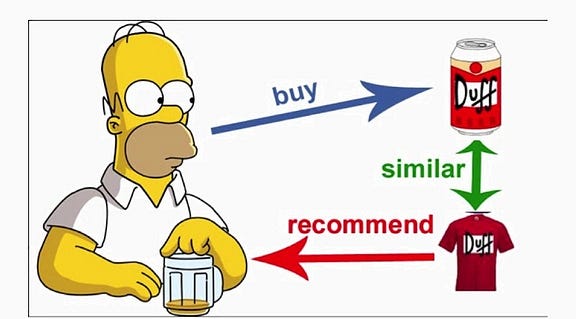
Have you ever shopped online? And If your answer is Yes..
Did you noticed, when you search for any product, it recommends for a product similar to what you are looking for? or “The person bought this product, also bought this” combination of products. How are they doing this recommendation for the customers?
This is Machine Learning.
✔ When do we need machine learning rather than directly program our computers to carry out the task at hand ?
Two aspects of a given problem may call for the use of programs that learn and improve on the basis of their “experience”: the problem’s complexity and the need for adaptivity.
• Tasks Performed by Animals/Humans: There are numerous tasks that we human beings perform routinely, yet our introspection concerning how we do them is not sufficiently elaborate to extract a well defined program.
• Tasks Beyond Human Capabilities: Another wide family of tasks that benefit from machine learning techniques are related to the analysis of very large and complex data sets. With more and more available digitally recorded data, it becomes obvious that there are treasures of meaningful information buried in data archives that are way too large and too complex for humans to make sense of.
✔ Types Of Machine Learning :
- Supervised Learning -- Just Train Me !
- Unsupervised Learning -- I Can Train Myself !!
- Reinforcement Learning -- My Life, My rules !!!
Algorithms :
So, based on how the machine learning model learns, the respective algorithms are usually divided into four groups :
1. Supervised Learning : Supervised learning is something like when the tutor teacher's in the class throughout the time and the student has to only listen the teacher and follow the instructions given by the teacher.
The algorithms like Naive Bayes, Support Vector Machine, K-Nearest Neighbours, Logistic Regression, etc used here.
2. Unsupervised Learning : In Unsupervised learning, you are not supposed to give any instructions by the teacher. But you are just having your previous knowledge and according to that knowledge you have to predict the future planning.
The algorithms like K-means clustering, Mean-Shift, Singular Value Decomposition (SVD), etc used here.
3. Semi-supervised Learning : In Semi supervised machine learning algorithm, you are supposed to listen from the tutor itself and along with that you have to take the reference from your previous knowledge gained on real time situations.
4. Reinforcement Learning : In Reinforcement learning machine learning algorithm, you are not supposed to listen to the tutor but you just have to practice through the Real World situations in order to apply, when needed. And based on the perfection in the prediction, you will be awarded or penalized accordingly.
Applications :
Typical successful applications of machine learning to such problems include :
1. Decode Handwritten Text, where a fixed program can adapt to variations between the handwriting of different users.
2. Spam Filtering System, where the data is taken, then we generally analyze and explore the email data and finally we retrieve the spam data or adapting automatically to changes in the nature of spam e-mails.
3. Speech Recognition Software, works by breaking down the audio of a speech recording into individual sounds, analyzing each sound, using algorithms to find the most probable word fit in that language, and transcribing those sounds into text.
4. Product Recommendations, did you noticed, when you search for any product, it recommends for a product similar to what you are looking for? or “The person bought this product, also bought this” combination of products. How are they doing this recommendation for the customers? This is product recommendations.
5. Image Recognition, an approach for cataloging and detecting a feature or an object in the digital image.
Very good information 👍👍
ReplyDeleteKeep it up...Thanks for the information @Pulkit
ReplyDeleteNice work bro it's very simple to understand
ReplyDeleteVery nice pulkit.
ReplyDeleteGood job bro..
ReplyDeleteThanks all for your contribution.
ReplyDeleteNice blog bro
ReplyDeleteGreat job keep it up 👍🏿👍🏿
ReplyDeleteThanks @ARIM QADIR
ReplyDelete